25 March, early morning
Bread and Breakfast
In [Saint Petersburg](entity:location-recall-location-9f1d225f9690), [Ivan Yakovlevitch](entity:character-recall-character-ivan-yakovlevitch-8cdd323be1f2) woke to the smell of fresh bread and asked his wife, Prascovia Osipovna, for a roll and onions instead of coffee. She tossed a loaf onto the table, privately pleased that she could keep the coffee for herself
25 March, shortly after breakfast begins
A Nose in the Loaf
[Ivan Yakovlevitch](entity:character-recall-character-ivan-yakovlevitch-8cdd323be1f2) cut the loaf and found a nose inside it. He recognized it as belonging to [Platon Kovaloff](entity:character-recall-character-platon-kovaloff-c9bf3ff1177a), whom he shaved regularly, and recoiled at the discovery. His wife immediately accused him of cutting it off, invoking customers’ complaints that he gripped their noses too roughly while shaving.
The impossible object turns a routine meal into a potential crime scene. Ivan’s horror is compounded by the prospect of police scrutiny, while the nose’s sudden separation from its owner makes the story’s central absurdity physical and undeniable.
25 March, after the discovery
The Barber’s Panic
Ivan tried to persuade his wife that he could wrap the nose and leave it in a corner until he found a way to remove it. Prascovia Osipovna refused to keep it in the room and berated him, demanding that he take it away before it brought trouble upon them.
Ivan could offer no explanation for how a nose had ended up inside a loaf. Afraid that the police would arrest him for possessing it, he dressed and wrapped the object in cloth, accepting that he had to dispose of it quickly.
25 March, later that morning
The Bridge Disposal
Ivan set out to get rid of the wrapped nose, but a passing acquaintance’s questions delayed him. When he finally let the bundle fall, a sentry noticed and ordered him to pick it up, forcing the terrified barber to hide it in his pocket again.
As the streets grew busier, Ivan resolved to throw the nose into the Neva from the Isaac Bridge, hoping the river would erase his connection to it. He dropped the bundle into the water and felt relieved, believing the danger had passed.
25 March, immediately after the disposal
The Inspector’s Interrogation
After throwing the nose into the Neva, Ivan turned toward a tea house. A police inspector on the bridge summoned him and demanded to know why he had been standing by the railing. Ivan denied doing anything suspicious and offered to shave the inspector for free, but the official pressed him to confess.
Ivan grew pale, and the narration leaves the outcome of the encounter obscure. The threat of authority remains hanging over him, even as the account shifts to the man whose missing nose has brought the barber to the bridge.
25 March, early morning
The Empty Face
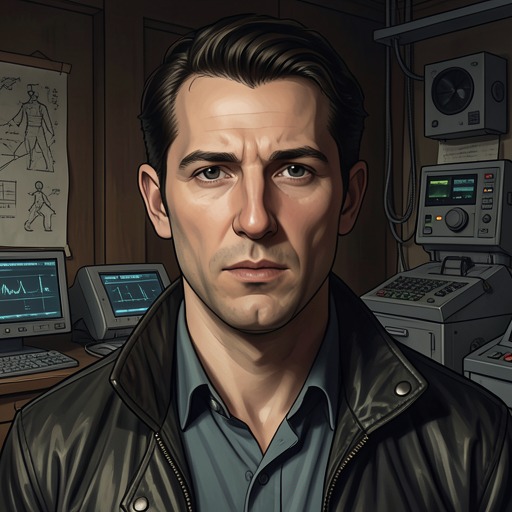
[Platon Kovaloff](entity:character-recall-character-platon-kovaloff-c9bf3ff1177a) woke and asked his valet for a mirror, expecting to inspect a boil on his nose. Instead, he saw a smooth blank where the feature should have been. He checked again, rubbed his face, and found that the absence was real.
His first response was alarm, followed by an urgent decision to seek official help. The loss is not merely bodily: Kovaloff depends on his appearance and rank as he pursues a government post and hopes to move among influential acquaintances.
25 March, after Kovaloff awakens
A Major Without a Nose
The narration explains that Kovaloff had served in the Caucasus and insisted on being called Major, though his formal committee title was different. In [Saint Petersburg](entity:location-recall-location-9f1d225f9690) he sought a position befitting his ambitions, ideally a vice-governorship, and was willing to settle for a bailiff’s post. He also considered marriage, but wanted a wife with a substantial dowry.
These ambitions sharpen the stakes of his disfigurement. Kovaloff fears that a feature he treats as essential to public standing will obstruct his prospects, revealing how thoroughly he measures identity through rank, appearance, and social access.
25 March, shortly after Kovaloff discovers the loss
The Confectioner’s Mirror
Unable to find a carriage, Kovaloff walked through the streets with a handkerchief held to his face, hoping the loss might be only an illusion. He slipped into a confectioner’s shop and checked a mirror, but saw that the blank in his face remained.
The confirmation deepened his distress. He tried to avoid looking at or smiling at anyone in the street, only to be stopped by a sight stranger than the one he had just verified.
25 March, later that morning
A State Councillor Arrives
A carriage stopped at a doorway, and a uniformed gentleman hurried inside. Kovaloff recognized the gentleman as his own nose. After a short interval, the nose emerged dressed in a gold-embroidered uniform, with a high collar, sword, and plumed hat indicating the rank of state councillor.
The nose’s independent life makes Kovaloff’s private misfortune a public spectacle in the making. Its apparent superiority in rank also turns the story’s fixation on official hierarchy into literal comedy: the severed feature outranks its former owner.
25 March, moments after the appearance
The Nose at the Market
Kovaloff followed the carriage to the Moscow Great Market, where he eventually spotted the nose inspecting goods outside a shop. It seemed almost swallowed by its stiff collar, and Kovaloff hesitated, unsure how to address a figure whose uniform proclaimed a higher station than his own.
He coughed discreetly, then approached and tried to make the nose understand that it belonged to him. The encounter exposes Kovaloff’s uncertainty: even in the face of the impossible, he struggles to challenge someone who appears to outrank him.
25 March, at the market
The Nose Rejects Its Owner
Kovaloff told the nose that it should know where it belonged and that a Major could not go about without such a prominent feature. He appealed to duty and propriety, explaining that his acquaintances and ambitions made his condition intolerable.
The nose denied that it had any close relation to him and asserted its own identity. It pointed to the difference between their uniform buttons as evidence that they belonged to separate departments, then turned away, leaving Kovaloff unable to assert ownership over the feature that had once been part of his body.
25 March, immediately after the confrontation
The Ladies’ Arrival
An older lady and her graceful daughter approached, accompanied by a tall footman. Kovaloff instinctively adjusted his collar and seals and turned his attention toward the young woman, following his usual habits of social display and courtship.
Then he remembered that his face was blank. He turned back to denounce the nose for its deception, but the uniformed figure had already disappeared, apparently continuing its calls. The encounter leaves Kovaloff’s social ambitions colliding with the humiliating reality of his loss.
25 March, after the nose disappears
The Search for the Carriage
Kovaloff stood beneath a colonnade, trying to reconstruct details that might help him identify the nose’s carriage. He remembered its plumed hat and embroidered uniform, but had not noticed the carriage, horses, or any servant accompanying it. With so many vehicles passing, he saw little chance of finding it.
The uncertainty drove him to abandon the search on foot. He hired a droshky and ordered the driver to take him to the police superintendent, believing that official intervention might be his most effective route to recovery.
25 March, later that morning
The Superintendent Is Out
At the police superintendent’s residence, Kovaloff learned from the porter that the official had just gone out. Kovaloff returned to his carriage and shouted for the driver to go on, but the driver asked which direction to take at a nearby crossroads.
The interruption forced Kovaloff to reconsider his plan. He feared that the nose might use the delay to leave the city, so he decided to publish a notice seeking its return before it could escape.
25 March, later that morning
The Advertisement Office
Kovaloff hurried to the advertisement office, where a grey-haired official was busy calculating charges and processing notices. The crowded, close room was filled with people advertising goods, animals, and services; an aristocratic servant was discussing a reward for a dog.
Kovaloff’s urgent personal emergency had to compete with ordinary commercial business. When the official finally turned to him, Kovaloff explained that a scoundrel had cheated him and asked for an advertisement that would lead to the culprit’s capture.
25 March, at the advertisement office
The Lost Nose Notice
Kovaloff initially refused to give his name, fearing that women he knew might hear of his condition, and suggested that the notice identify him only as a committee-man or Major. When the official assumed that the fugitive was a serf, Kovaloff clarified that the missing fugitive was his own nose, which now walked around the city as a state councillor.
He argued that the feature was essential to his life and social standing, especially because he visited prominent women and hoped to advance in the civil service. The official treated the request as implausible and worried that publishing it would compromise the paper.
25 March, at the advertisement office
The Official Refuses
The official refused to print the notice, citing a previous advertisement that had used a lost dog as a satirical reference to a cashier. He suspected Kovaloff of making a joke, even after Kovaloff uncovered his face and showed him the smooth, nose-less surface.
The official conceded that the appearance was astonishing but still suggested that Kovaloff seek a writer to describe the matter as a curious phenomenon. His bureaucratic skepticism left Kovaloff without the public appeal he had hoped would find the missing feature.
25 March, after the refusal
The Snuffbox Insult
The official tried to console Kovaloff by offering him snuff, praising its effects on the head and mood. Kovaloff took the gesture as an insult: without a nose, he could not use the snuff at all, and he angrily rejected the offer.
He left the office in frustration and went to the police commissary, hoping that another official would take the case seriously. The failed appeal shows how even a small social courtesy becomes an uncomfortable reminder of the part of himself he has lost.
25 March, later that day
The Commissary’s Rebuke
Kovaloff found the police commissary resting and pleased with the prospect of making money. The commissary received him coldly, saying that respectable people did not have their noses stolen and that the afternoon was a time for rest after eating.
Kovaloff, acutely sensitive to any slight against his rank, took the remark as an insult to his social position. He raised his head, declared that he had nothing more to say, and left without securing assistance.
25 March, toward evening
A Desperate Return Home
Exhausted by the day’s fruitless appeals, Kovaloff returned home to find his valet Ivan lying on a couch and entertaining himself by spitting at the ceiling. The servant’s calm struck Kovaloff as intolerable, and he hit him with his hat and scolded him before going into his room.
Alone, Kovaloff wondered why such a misfortune had befallen him and insisted that losing a nose was worse than losing a limb. He considered whether he might be dreaming or delirious, but pinched himself hard enough to confirm that he was awake.
25 March, toward evening
The Sorcery Suspicion
Kovaloff examined his face in the mirror and remained unable to explain the loss. He began to suspect Alexandra Podtotchina, the colonel’s wife, because she wanted him to marry her daughter and he had avoided committing himself. He imagined that she might have hired sorceresses to disgrace him.
He reasoned that the nose had not been cut off: he had felt no pain, the surface was smooth, and he had seen it on his face after his recent shaving. The suspicion reflects his desperate need to attach an intelligible cause to an event that resists explanation.
25 March, later that evening
The Nose Is Found
A police official arrived at Kovaloff’s home and announced that the missing nose had been found. He said it had been arrested as it was attempting to leave by carriage for Riga, carrying a passport made out in the name of an official. The official had initially mistaken it for a gentleman before recognizing what it was.
The official also reported that [Ivan Yakovlevitch](entity:character-recall-character-ivan-yakovlevitch-8cdd323be1f2) had been arrested as the principal culprit. He brought the nose to Kovaloff wrapped in paper, declaring it uninjured and returning the impossible object to its owner.
25 March, immediately after the recovery
Recognition of the Boil
Overjoyed, Kovaloff examined the recovered nose in his palm and recognized the boil that had appeared on its left side the previous evening. He thanked the police official and invited him to stay for tea, but the official declined because he had to go to the House of Correction.
The recognition reassured Kovaloff that the recovered feature was truly his. Yet the immediate relief did not resolve the practical problem of how to restore it to his face.
25 March, after the official leaves
The Failed Reattachment
Kovaloff’s joy faded as he realized that the nose still had to be joined to his face. He tried to position it carefully, warmed it with his breath, and pressed it into place, but it would not stick and fell onto the table like a cork.
The failure turned recovery into another crisis. Kovaloff summoned a doctor, understanding that possession of the nose meant little if he could not restore his former appearance.
25 March, shortly after the failed attempt
The Doctor’s Examination
The doctor examined Kovaloff’s face by prodding the empty place from different angles. He declared that reattachment could not be done and warned that an attempted remedy might make matters worse. He advised Kovaloff to let nature take its course and suggested preserving the nose in spirits or vinegar.
Kovaloff rejected the advice, insisting that he could not appear in society without his nose, especially with parties and visits ahead. The doctor remained courteous but firm, even offering to buy the nose, and left without helping him.
The day after the recovery
The Accusation Letter
Before bringing a formal case, Kovaloff wrote to Alexandra Podtotchina, accusing her of using spells to separate his nose and make it appear in different disguises. He demanded that she restore it to its proper place that day or face legal action.
His letter reveals how strongly he clings to his suspicion despite having no proof. By presenting the impossible events as a deliberate conspiracy, he tries to force a personal grievance into a form that can be answered through law and social obligation.
Soon after Kovaloff sends the letter
Podtotchina’s Denial
Alexandra Podtotchina replied that she was astonished by the accusation and had not been involved in any such affair. She mentioned that another suitor had visited her, but insisted that she had never encouraged him, and reiterated that she had hoped Kovaloff would marry her daughter.
After reading the reply, Kovaloff decided that Podtotchina could not be guilty: he thought a criminal could not have written such a letter. With that theory discarded, he was left again without an explanation for how his nose had vanished and returned to his possession without being reattached.
After the disappearance becomes public
The City’s Rumors
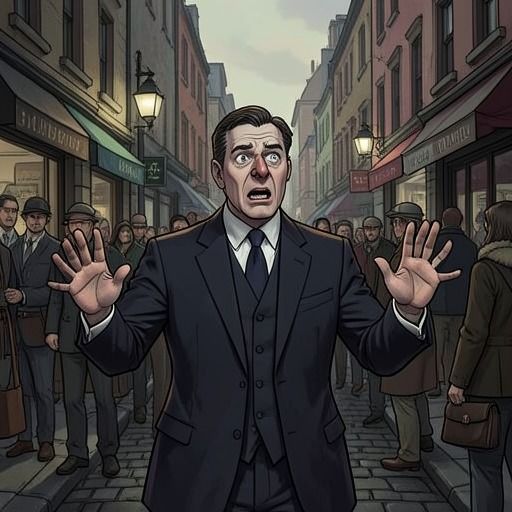
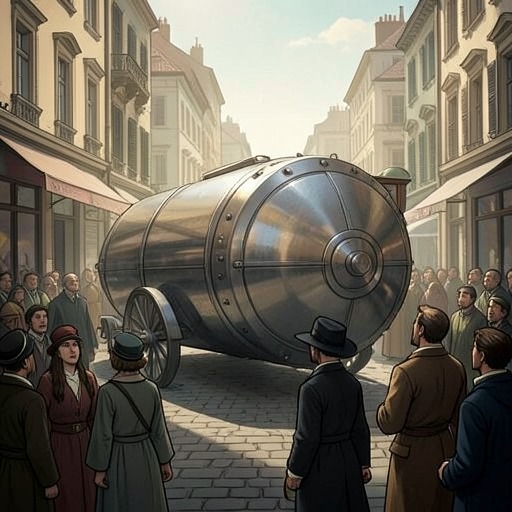
News of Kovaloff’s missing nose spread through [Saint Petersburg](entity:location-recall-location-9f1d225f9690) and grew with each retelling. As public interest in wonders and magnetic experiments fueled speculation, people claimed that the nose walked every day at three on Nevsky Avenue. A report that it had appeared in Junker’s stores drew such a crowd that police had to restore order.
A profiteer set up benches and charged curious spectators to look, but a visiting colonel found only the shop’s familiar display. Other stories placed the nose in the Tauride Gardens, where students and a well-born woman sought it out, while more sober citizens complained about the public’s credulity.
7 April
The Nose Returns
On [7 April](entity:time-recall-time-7-april-6c0a9307f01c), Kovaloff woke and discovered in a mirror that his nose had returned to its proper place. He touched it to be certain, washed his face, and checked again; the nose remained. He even tested the valet Ivan by asking about a boil, relieved when Ivan saw no sign that anything was wrong.
The return came as inexplicably as the disappearance. No repair, explanation, or decisive intervention preceded it, leaving the restoration as a sudden reversal of the story’s central bodily rupture.
7 April, shortly after the nose returns
The Barber’s Careful Shave
[Ivan Yakovlevitch](entity:character-recall-character-ivan-yakovlevitch-8cdd323be1f2) came to shave Kovaloff, approaching timidly. Kovaloff asked whether the barber’s hands were clean, distrusting him even after he swore that they were. Ivan lathered his face, studied the restored nose, and nearly reached for it out of habit before Kovaloff warned him to take care.
The barber completed the shave by supporting Kovaloff’s jaw and cheek rather than using the nose as a guide. Their familiar professional routine resumed, but now it carried the memory of Ivan’s discovery and Kovaloff’s frightening loss.
7 April, later that morning
The Mirror Confirmations
After the shave, Kovaloff hurried to the confectioner’s shop and checked the mirror; his nose was still there. He went to the department office where he had sought a post, checking another mirror in the reception hall, then visited a sarcastic acquaintance and watched for any reaction to his face.
Each ordinary public encounter became a test of whether the restoration would hold. When no one laughed or remarked on his appearance, Kovaloff accepted that his nose had returned completely to its accustomed place.
7 April, later that day
The Renewed Courtship
Kovaloff met Alexandra Podtotchina and her daughter and found them gracious toward him. During their conversation he took several pinches of snuff, privately pleased that they had not caught him in his earlier condition.
He also decided that he would not marry the daughter, despite the mother’s hopes. With his appearance restored, Kovaloff resumed the social maneuvering and self-assurance that had defined his life before the loss.
After 7 April
Life Resumes
Kovaloff returned to walking along Nevsky Avenue and visiting the theatre as though nothing had happened. His nose stayed in place, and he once again smiled, kept good company, and paid attention to pretty women.
The recovery restores his outward routine without supplying any explanation for the upheaval. The tale closes on the contrast between the city’s normal social life and the impossible event that briefly made a man’s nose an independent, higher-ranking figure.
Near the ending
The Narrator’s Doubts
The narrator reflects that the events appear improbable, questioning both the nose’s disappearance and its public life as a state councillor. He also wonders how Kovaloff could have thought it proper to advertise for a lost nose, and admits that Ivan’s discovery of it in bread remains incomprehensible.
Rather than solve the mystery, the narrator turns the story’s absurdity back upon the act of storytelling, questioning why an author would choose such a subject. Yet he concludes that such occurrences, however rare, do happen, leaving the reader with an unresolved mixture of skepticism and acceptance.